Sunday, 30 March 2014

Accelerating Use of Renewable Energy

Posted: Updated: 
US energy policy is stuck on reliance on natural gas. Most Americans understand that by the middle of the century most of our energy will have to be supplied by renewables -- wind, water and solar -- but we seem content to use natural gas for the foreseeable future. Unfortunately, this is not a realistic policy.
We're running out of time. Writing in Rolling Stone, environmentalist Bill McKibbenwarned that humans can only emit 564 gigatons of carbon dioxide by 2050 and still have a reasonable chance of keeping the temperature increase below 2 degrees Celsius (the threshold for catastrophic consequences). Nonetheless, last year we pumped a record 36 gigatons into the atmosphere; at this rate we'll exceed 564 gigs in about a decade. Writing in the Washington Post, Brad Plumer observed that if we are serious about averting horrific climate change, "[Then] the world can use natural gas for only a brief period before transitioning to carbon-free power. Global gas consumption would have to peak by 2020 or 2030."
What will it take to get us to move aggressively to sole reliance on renewable energy?
First of all, it has to be feasible to move to water, wind and solar. Fortunately, there's a lot of evidence that it is. Speaking on The David Letterman Show, Stanford University Professor Mark Jacobson touted his plan to move the US off of fossil fuels by 2050. Jacobson's Solutions Project has developed a detailed plan for each state.
The narrative differs depending upon where you live. The Solutions Project has a plan for California, where 95 percent of our electricity would be generated by renewables by 2050. In the most recent California energy estimates renewables generated 17 percent of our electricity (in-state -- we import some energy). Today, more than 60 percent is developed using natural gas.
Fortunately, California state policy is behind our transition to renewables: by 2020, California plans to generate 33 percent of its electricity from wind, water and solar. Recently, Pacific Gas & Electric, the second largest California public utility, announced that it has "delivered 22.5 percent of its power from eligible renewable resources in 2013 and is on track to meet the state's clean energy goals for 2020 and beyond."

Tuesday, 4 March 2014

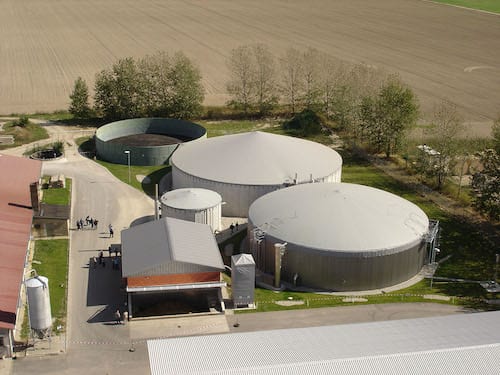
Renewables power a rural German village


Biogasanlage_Feldheim_0052Regardless of debate about the success of Germany’s renewables revolution, there is no denying that a small town in the corner of rural eastern Germany, 40 miles south of Berlin, may be one of the best examples of decentralized self-sufficiency. Feldheim (pop. 150), in the cash-strapped state of Brandenburg, was a communist collective farm back when Germany was still divided into East and West. Now it is a model renewable energy village putting into practice Germany’s vision of a renewably powered future.
In 1995, a local entrepreneur paid for Feldheim’s first wind turbine. As farmers started to worry when prices for their milk, potatoes, and beets began to fall and energy prices started to rise, they learned they could earn cash by renting their land to energy companies wanting to install a wind turbine. A local renewable energy company, Energiequelle GmbH, saw the potential as well, and decided to install a wind farm in Feldheim. Forty-three wind turbines with an installed capacity of 74.1 MW soon dotted the Feldheim landscape, providing income to farmers who leased their land to the energy company.
Renewable fervor was catching on, and in 2008 Energiequelle bought a 111-acre former Soviet military site about five miles from Feldheim, cleaned up the toxic military waste and hidden ammunition, and constructed a 284-panel solar farm that produces over 2,700 MWh per year. Its power is fed into the grid at the feed-in-tariff rate.
That same year, the town of Feldheim and Energiequelle established a joint venture, called Feldheim Energie GmbH & Co. The new company built a biogas factory that converts pig manure and unused corn into heat, taking advantage of the community’s 700 pigs and 1,700 acres of arable farmland. The biogas plant is fed from the town’s agricultural cooperative and produces of electricity a year. A 400-kW wood-chip furnace fueled by the byproduct of forest thinning helps to firm the power from wind and biogas.

Tuesday, 18 February 2014

India to switch 26m water pumps to solar from diesel


The Indian government is aiming to swap out 26 million fossil-fuel-powered groundwater pumps for solar-powered ones, Bloomberg reports.
The pumps are used by farmers throughout the country to pull in water for irrigation, and currently rely on diesel generators or India’s fossil-fuel-reliant electrical grid for power. Pashupathy Gopalan, the regional head of SunEdison, told Bloomberg that 8 million diesel pumps already in use could be replaced right now. And India’s Ministry of New and Renewable Energy estimates another 700,000 diesel pumps that could be replaced are bought in India every year.
“The potential is huge,” said Tarun Kapoor, the joint secretary at the ministry. “Irrigation pumps may be the single largest application for solar in the country.”
The program works by subsidizing the swap, and operates in different capacities in India’s various states, sometimes subsidizing the solar pumps up to 86 percent. Thanks to that aid, and the dramaticcollapse in prices for solar power, the pumps pay themselves off in one to four years, according to Ajay Goel, the chief executive officer of Tata Power Solar Systems Ltd., a panel maker and contractor. And Stephan Grinzinger, the head of sales for a German solar water pump maker, told Bloomberg the economics will only get better: diesel prices will rise and spike during farming season, and economies of scale will help the swap program.
Two-thirds of India’s electricity is generated by coal, with natural gas and hydroelectric making up most of the rest. But the monsoon season is growing more erratic — likely due to climate change — making power from the hydroelectric dams less reliable as well. Coal is growing in economic cost for India, so power plants often sit idle, and the coal that is easy to reach would require displacing major population centers.
The national grid that relies on those fuels has seen few updates since it was constructed in they 1960s. It’s also under growing stress from India’s rising middle class, which is adopting air conditioning and running water in massive numbers — all in a country prone to heat waves, again thanks in part to climate change. As backup, many Indian residents and businesses rely on diesel generators, which leaves them vulnerable to the fuel market and contributes to fossil fuel emissions.
Even when the grid is working, around 300 million of India’s 1.2 billion inhabitants don’t have access to it. When it’s not, rolling blackouts are common. Many farmers are able to draw only four hours of power a day from the grid, and that often at night. Heat waves in 2013 were accompanied by widespread blackouts, and a two-day grid failure in 2012 left over 600 million Indians without power.
Ironically, thanks to the kind of distributed and sustainable generation the swap program represents, many of India’s rural poor actually faired much better during the blackout than the grid-dependent middle-class. It’s one of the strengths of solar in particular, even before climate change is considered: a more decentralized power system, based around “microgrids” and individual power generation, rather than a centralized system reliant on the good function of large, singular power providers. In India in particular, sunlight is most plentiful at the times when demand tends to peak. That leaves the power system more adaptable, less prone to central failures, and thus more hospitable to those still struggling to overcome poverty in particular.
Beyond India’s pump swap program, other efforts in south Asia and northern Africa are already underway to bypass grid expansion entirely, and bring solar power and microgrids directly to poor people.